
Restaurant type
Asian
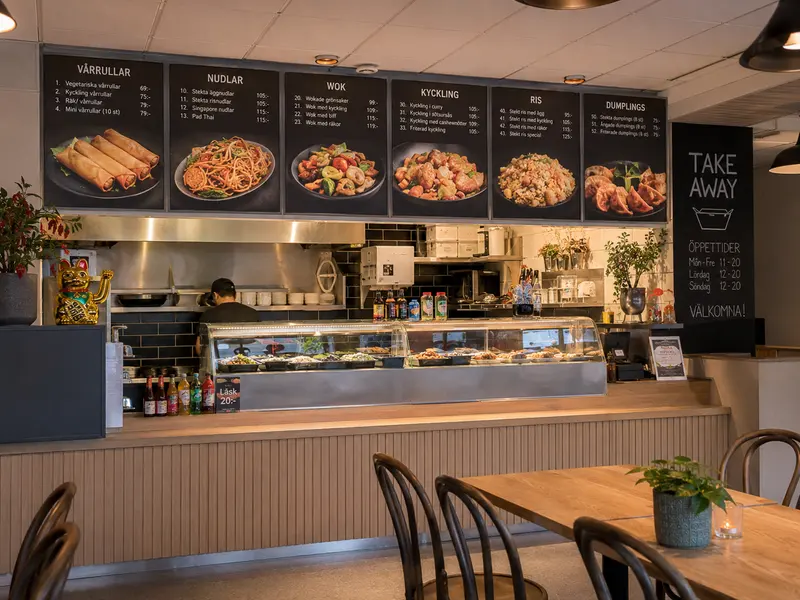
Wok, noodles and dumplings. High heat, fast cooking and a menu that can be carried by surprisingly few ingredients.
- 01
Power before everything
A real wok needs more heat than a stove gives. The electricity or the gas decides how the food tastes.
- 02
Few ingredients, many dishes
Rice, noodles, chicken, vegetables and three sauces are enough for twenty dishes. That keeps waste low.
- 03
Lunch is the engine
A fast wok suits an office lunch perfectly. Many Asian places do half the week between eleven and two.
- 04
The rice is the risk point
Cooked rice left at room temperature is the most common cause of food poisoning in this type of kitchen.
Summary
An Asian kitchen is built around the wok station, and it needs more power than a normal stove. The menu can rest on five to seven ingredients that come back in many dishes, which keeps waste low. The biggest risk point is cooked rice: it has to be chilled fast and never left standing, because bacteria grow quickly in lukewarm rice.
The wok station and the heat
A wok dish gets good from high heat over a short time. A normal induction hob does not take you all the way, and you taste it straight away.
A gas wok burner gives the most power but needs an approved installation and good ventilation. A powerful induction wok is easier to get installed and is enough for many lunch kitchens.
- Check the electrical supply before you buy. An induction wok draws a lot.
- LPG in a kitchen requires an approved installation, an alarm and inspection
- Have two wok burners if you run lunch, otherwise the queue becomes the bottleneck
- The ventilation has to handle both heat and fumes. Count on a stronger unit than in a normal restaurant.
The rice is the most important routine
Cooked rice contains spores that survive the boiling and start to grow when the rice stands lukewarm. It is the most common cause of food poisoning in Asian kitchens, and the municipality knows it.
Have a written routine for the rice and show it at the inspection. It makes the whole visit easier.
- Chill cooked rice fast in thin layers, not in a deep pot
- From hot to fridge temperature within four hours
- Rice that is kept hot has to stay above plus sixty degrees the whole time
- Only reheat the amount that will be used, and never twice
- Write down the temperature of the rice every day. That is the log the inspector wants to see first.
Buying speciality goods
Soy, oyster sauce, rice noodles, jasmine rice and fresh vegetables are sold by Asian wholesalers at different prices than the big wholesaler.
Many run a mix: basics and meat from the big wholesaler, speciality goods from an Asian supplier once a week.
- Asian wholesalers in the big cities often deliver to a whole region
- Buy dry goods in bigger packs, they keep for a long time and the price per kilo drops
- Fresh herbs and vegetables are ordered more often and in smaller amounts
- Check the labelling and the ingredient list on imported goods. You are responsible for being able to answer questions about allergens.
A menu that sells both lunch and evening
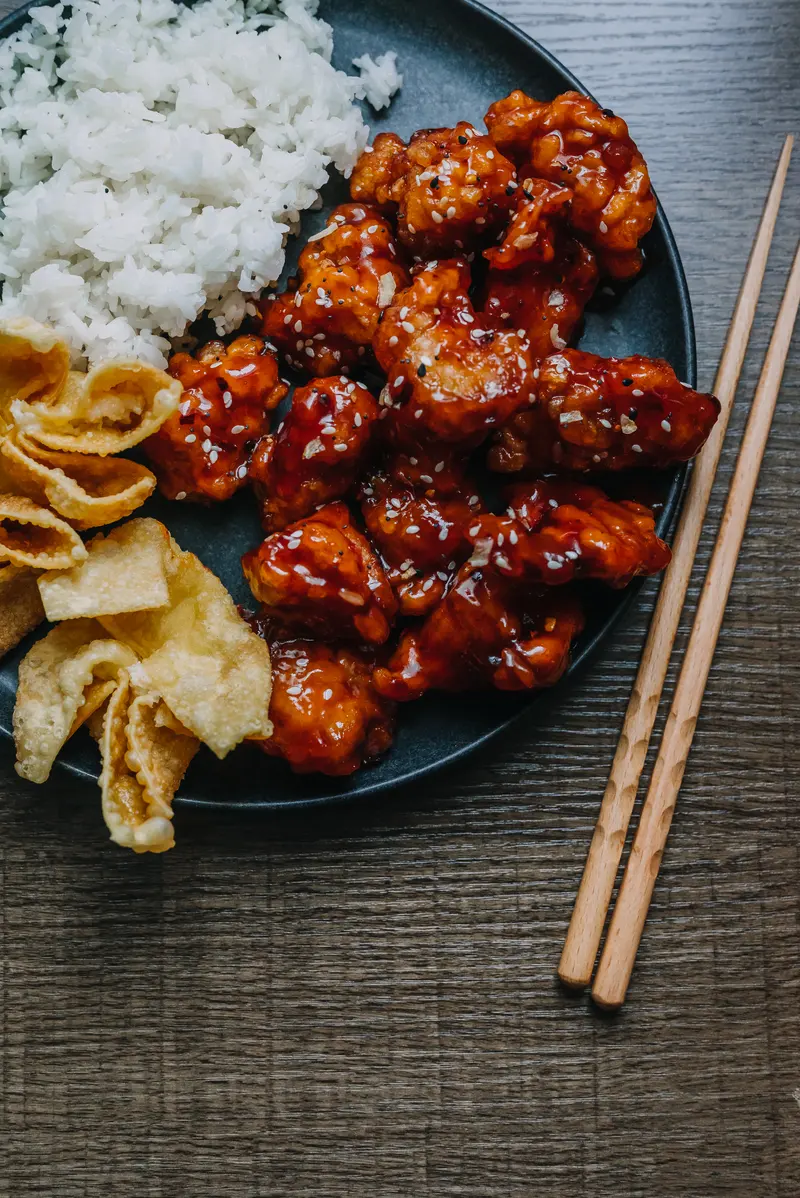
Lunch has to be fast, good value and easy to choose from. The evening can be freer and more expensive. The same kitchen has to handle both without doubling the stock.
Build lunch on three to five dishes that can be prepared halfway in the morning and finished in the wok in two minutes.
- Let lunch and evening share ingredients, only in different formats
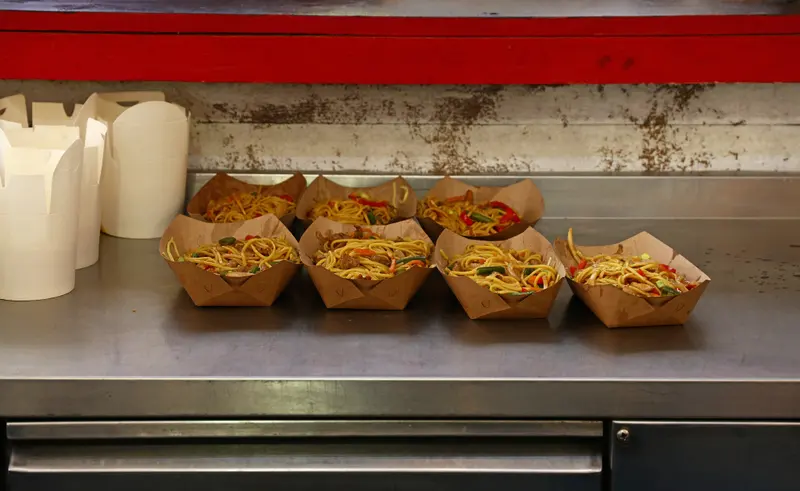
- Take away in boxes that survive twenty minutes of transport without the noodles turning to mush
- Mark vegetarian and gluten free clearly. Soy often contains wheat.
- One hot and one mild version of the same dish is enough. Four heat levels only confuse people.
Numbers to plan with
Numbers to plan with
- 5 to 7 ingredients
- can carry a menu of twenty dishes
- 2 to 4 minutes
- is what a wok dish takes. The speed makes lunch profitable.
- 4 hours
- is the limit for chilling rice, from hot to fridge temperature
- Half the week
- is done at lunch between eleven and two
Common questions
Do I need LPG for the wok?
No. A powerful induction wok works well for many lunch kitchens and is easier to get installed. LPG gives more power but requires an approved installation, an alarm and fire safety that has been thought through.
Can I serve sushi as well?
Yes, but raw fish has rules on freezing and cold chain, and it changes your riskklassning, the risk class the municipality places you in. Read up on what applies before you put it on the menu.
How do I handle spicy food for Swedish guests?
Have a mild base version and offer heat as an option. It is easier in the kitchen than separate dishes, and the guest feels that they choose for themselves.
Fortsätt här
You need to read this too
- Machines and equipmentFryer, grill, fridges and dishwasher. New, used or leased.Read
- Hygiene and egenkontrollEgenkontroll, your own food safety checks, in ten minutes a day.Read
- Suppliers and buyingWholesalers, food margin and the art of not tying up your money.Read
- Menu and pricesWork out the price of every dish. Fewer dishes, more profit.Read