
Restaurant type
Sushi
Sushi is the restaurant type with the hardest rules. Raw fish needs freezing, a cold chain and routines that hold every day.
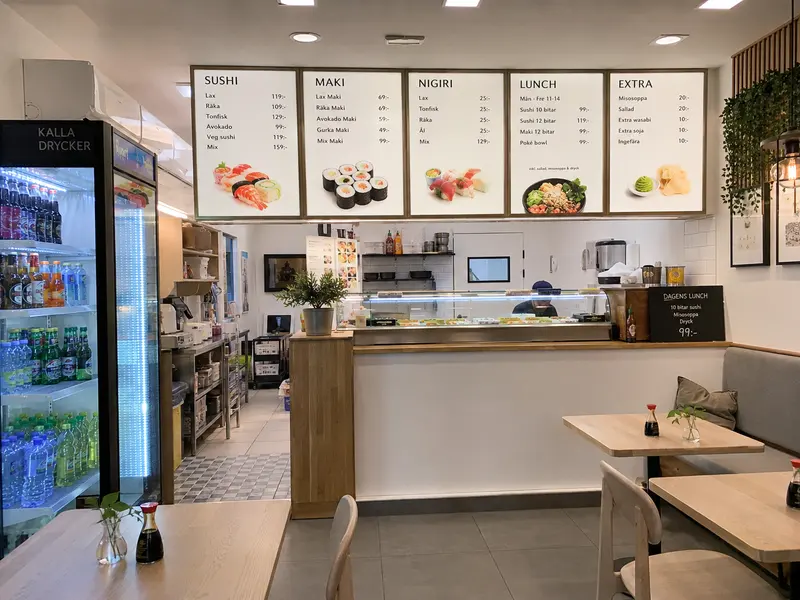
- 01
The fish has to be frozen
Fish that will be eaten raw has to be frozen to kill parasites. That is a legal requirement, not a recommendation.
- 02
The cold chain is everything
From delivery to plate the fish has to stay cold. An hour on the counter is an hour too many.
- 03
The rice decides the quality
Acidity and temperature in the rice control both taste and safety. That is the craft in a sushi bar.
- 04
The lunch box carries the finances
Many sushi places in Sweden live on lunch boxes and take away, not on evening service.
Summary
Fish that will be eaten raw has to be frozen before it is served, for at least 24 hours at minus 20 degrees or at least 15 hours at minus 35 degrees. There are exceptions for some farmed fish. The cold chain has to hold all the way and the rice is acidified so it can be handled safely. The municipality places sushi in a higher riskklassning, the risk class that sets how often you are checked, so count on more frequent inspections.
The requirement to freeze raw fish
Parasites in fish are killed by freezing, not by ordinary chilling. That is why there is a requirement that fish which will be eaten raw has to have been frozen before it is served.
If you buy fish that is frozen according to the rules, the supplier should be able to give you a certificate. Keep it. That is the document the municipality asks for first.
- At least 24 hours at minus 20 degrees all the way through the product
- Or at least 15 hours at minus 35 degrees
- There are exceptions for some farmed fish raised under controlled conditions
- Ask the supplier for a certificate and keep it in your egenkontroll, your own food safety documentation
- An ordinary shop grade freezer rarely holds minus 20 steadily. Check with a thermometer, not with the display.
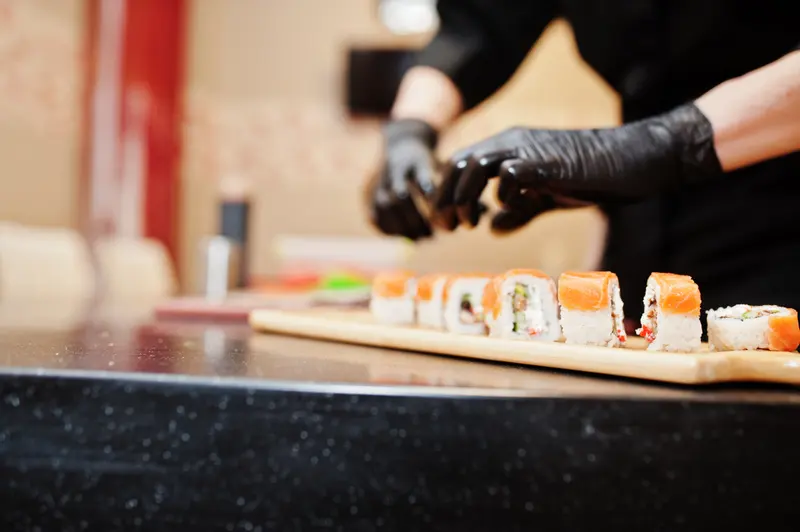
The cold chain from delivery to plate
Raw fish is the most sensitive ingredient in a Swedish restaurant kitchen. The temperature must never rise, not even during the twenty minutes it takes to cut it.
Take the delivery with the thermometer in your hand. If the fish is too warm on arrival it should not be accepted, however uncomfortable that feels.
- Measure the temperature at every delivery and write it down
- Take out only the amount you are going to cut, the rest stays in the fridge
- Keep the cutting board and the knife cold, wipe them between each type of fish
- Sushi in a chilled display has to hold fridge temperature all day, also during the lunch rush
- Throw away what has been left out. One saved piece is never worth a food poisoning.
The rice, the acidity and the handling
Sushi rice is mixed with a vinegar solution that lowers the pH. That gives both taste and safety: acidic rice gives bacteria worse conditions.
Measure the pH in the rice mix with strips or a meter until you know that your recipe stays safely below 4.6. Write it into your egenkontroll and show it at the inspection.
- Mix the vinegar solution by recipe, not by eye
- Measure the pH regularly and document the result
- Keep the rice covered and use it within the time your routine states
- New rice is never mixed into old rice
- Have a written routine for the rice. The inspector will ask for it.
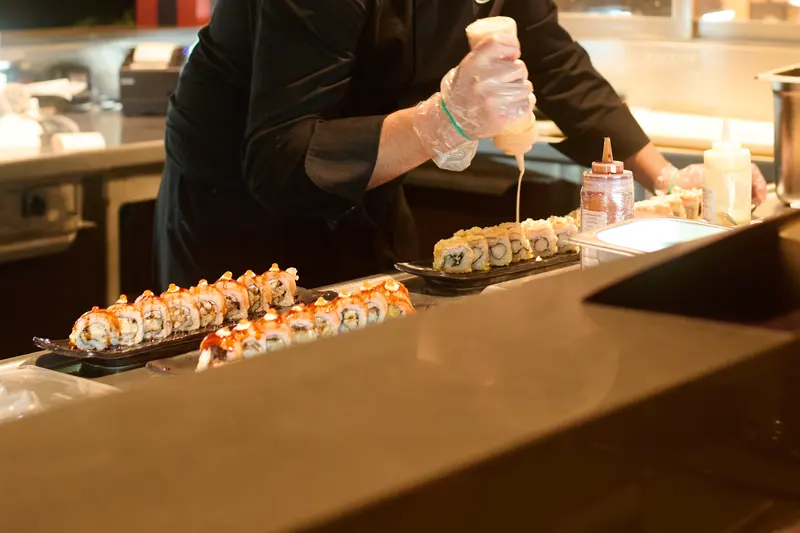
The finances in a sushi bar
Fish is expensive and the waste is merciless. A salmon that did not sell today cannot be sold tomorrow. That makes the forecast more important here than in almost any other kitchen.
Many Swedish sushi places make their money on lunch boxes and take away, with steady volume and fixed formats.
- Count the waste every day, not every month
- Lunch boxes in three fixed sizes make the buying predictable
- Use the whole fish. Trimmings become tartare, salad or a hot dish.
- Have a few hot dishes on the menu for guests who do not eat raw fish
- Charge for the quality. Cheap sushi competes with the chilled shelves in the shops and that fight you will not win.
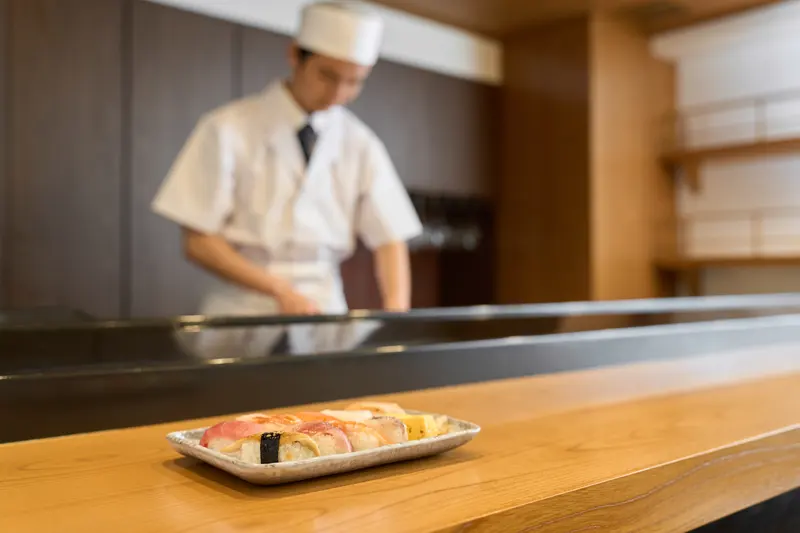
Numbers to plan with
Numbers to plan with
- Minus 20 degrees
- for at least 24 hours, or minus 35 degrees for at least 15 hours
- Plus 4 degrees
- or colder is where raw fish should be kept
- pH below 4.6
- in acidified sushi rice makes it safer to handle
- Higher risk class
- gives more inspection hours and a higher fee from the municipality
Common questions
Does all fish have to be frozen?
All fish that will be eaten raw or almost raw is covered by the requirement. There are exceptions for some farmed fish under controlled conditions. Ask the supplier what applies to the product you buy and ask for a certificate.
Can I buy fish directly from a fishmonger?
Yes, if they are registered and can show that the fish meets the requirements for raw consumption. You are responsible for the traceability, so keep delivery notes and certificates.
Do I need a trained sushi chef?
There is no formal requirement, but the knife technique takes time to learn and the quality shows on the plate straight away. Many open with an experienced chef and train staff at the same time.
How often does the municipality come to inspect?
More often than at a grill, because raw fish is placed in a higher risk class. Plan for at least two visits a year in the beginning. If you have your freezing certificates, temperatures and pH in order the visits go quickly.
What does it cost to start a sushi bar?
400 000 to 900 000 kronor with an existing kitchen. Chilled displays, a freezer that reaches minus 20 and a good prep surface cost more than in a simple grill, while a stove and a fryer matter less.
Fortsätt här
You need to read this too
- Hygiene and egenkontrollEgenkontroll, your own food safety checks, in ten minutes a day.Read
- Permits and registrationThe registration with the municipality and the fire safety that is really required.Read
- Suppliers and buyingWholesalers, food margin and the art of not tying up your money.Read
- What it costsWhere the money goes, krona by krona. Run the numbers on your own idea.Read
Types of place