
The handbook · Run and grow
Hygiene and egenkontroll
Ten minutes a day. That is the whole secret. Anyone who writes down the temperatures every day rarely has anything to be nervous about.
Summary
Egenkontroll means that you have written routines for how the food is kept safe, and that you document that they are followed. Chilled goods must be kept at no more than plus eight degrees, sensitive goods colder, and hot holding at least plus sixty degrees. Cooling from plus sixty to plus eight must happen within four hours. The municipality wants to see notes, not binders.
Numbers to plan with
- +8 degrees
- highest temperature in the fridge. Meat and fish do better at plus four.
- +60 degrees
- lowest temperature for hot holding
- 4 hours
- from plus sixty to plus eight when cooling down
- 14 allergens
- you must be able to answer for if a guest asks
What egenkontroll actually is
Egenkontroll sounds bureaucratic but is simple at heart: write down how you work, work the way it says and note that you did it. A small kitchen manages with a few pages.
Do not download a template and put it in a binder. The inspector sees straight away if the document describes another kitchen than yours.
- A routine for receiving goods and what you do if something is too warm
- Temperature checks in fridges and freezers, at least once a day
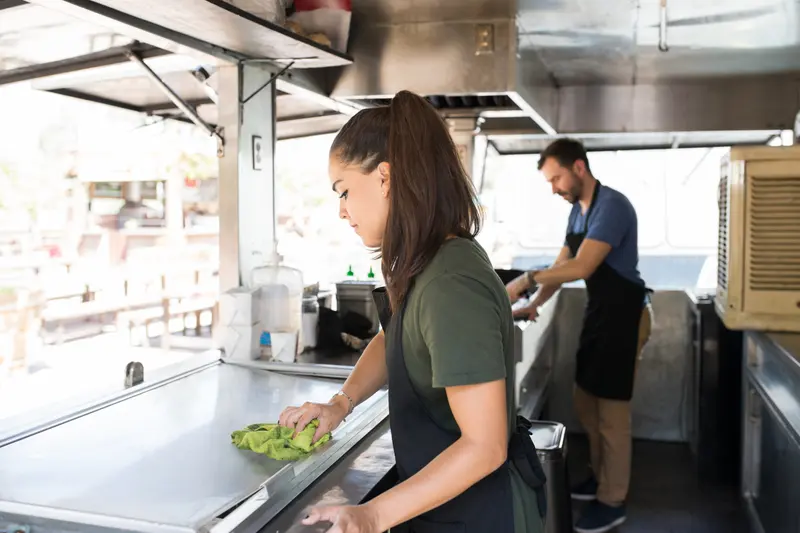
- A cleaning schedule with who does what and how often
- A routine for cooling, reheating and hot holding
- What you do when something goes wrong, and who decides that food is thrown away
The temperatures you have to know
These are the numbers that decide if the food is safe. Write them on a note in the kitchen until everyone knows them by heart.
| Situation | Temperature | Comment |
|---|---|---|
| Cold storage | No more than plus 8 degrees | Meat, fish and cooked food do best at plus 4 |
| Freezer storage | Minus 18 degrees or colder | Check after every delivery |
| Hot holding | At least plus 60 degrees | Applies to buffets, warming cabinets and lunch carts |
| Cooling down | Plus 60 to plus 8 within 4 hours | Split into thin layers, not whole pots |
| Reheating | At least plus 70 degrees | Right through the portion, not only on the surface |
Routines in daily work
Most of what goes wrong in a kitchen goes wrong because someone is in a hurry. Build routines that work even when the place is full.
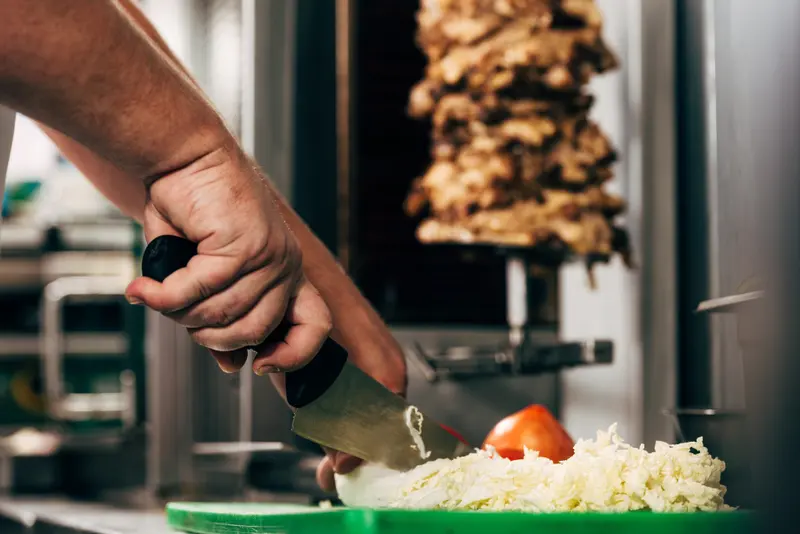
- Separate cutting boards and knives for raw meat and finished food
- Hand washing when you change task, not only after the toilet
- Date mark everything that is opened or prepared, with date and time
- First in, first out in every fridge and on every shelf
- Staff with stomach illness stay out of the kitchen, full stop
Allergens and special diets
You must be able to give information about fourteen allergens. It does not have to be on the menu, but someone on site must be able to answer correctly.
The most common risk is not the ingredients but cross contamination: the same tongs, the same fryer oil and the same cutting board.
- Keep a binder or a list with the contents of every dish that staff reach in ten seconds
- Change gloves and tools when you cook for a guest with an allergy
- Gluten and nuts in the fryer is a classic mistake. Just one fryer is rarely enough.
- Say no rather than maybe. A guest who gets a correct answer comes back.
Common questions
Does the egenkontroll have to be written?
The routines must be possible to show, and in practice that means written. The notes can be on paper or in an app. Digital temperature logs save time and are forgotten less often.
How often does the municipality visit?
It depends on your riskklassning, the risk class the municipality puts you in. A smaller place gets one to three planned visits a year. If you keep things in order there will be fewer. After a remark they come back to check, and you pay for that time.
What happens if I get a remark?
You get a deadline to put it right. Many remarks are about cleaning, temperatures or missing documentation. Correct it quickly and in writing, and the matter is closed.
How long does cooked food keep in the fridge?
Food that is properly cooled and covered keeps three to four days. Date mark everything so nobody has to guess. Something can look fine and still be too old, and then it is the date that counts, not the smell.